
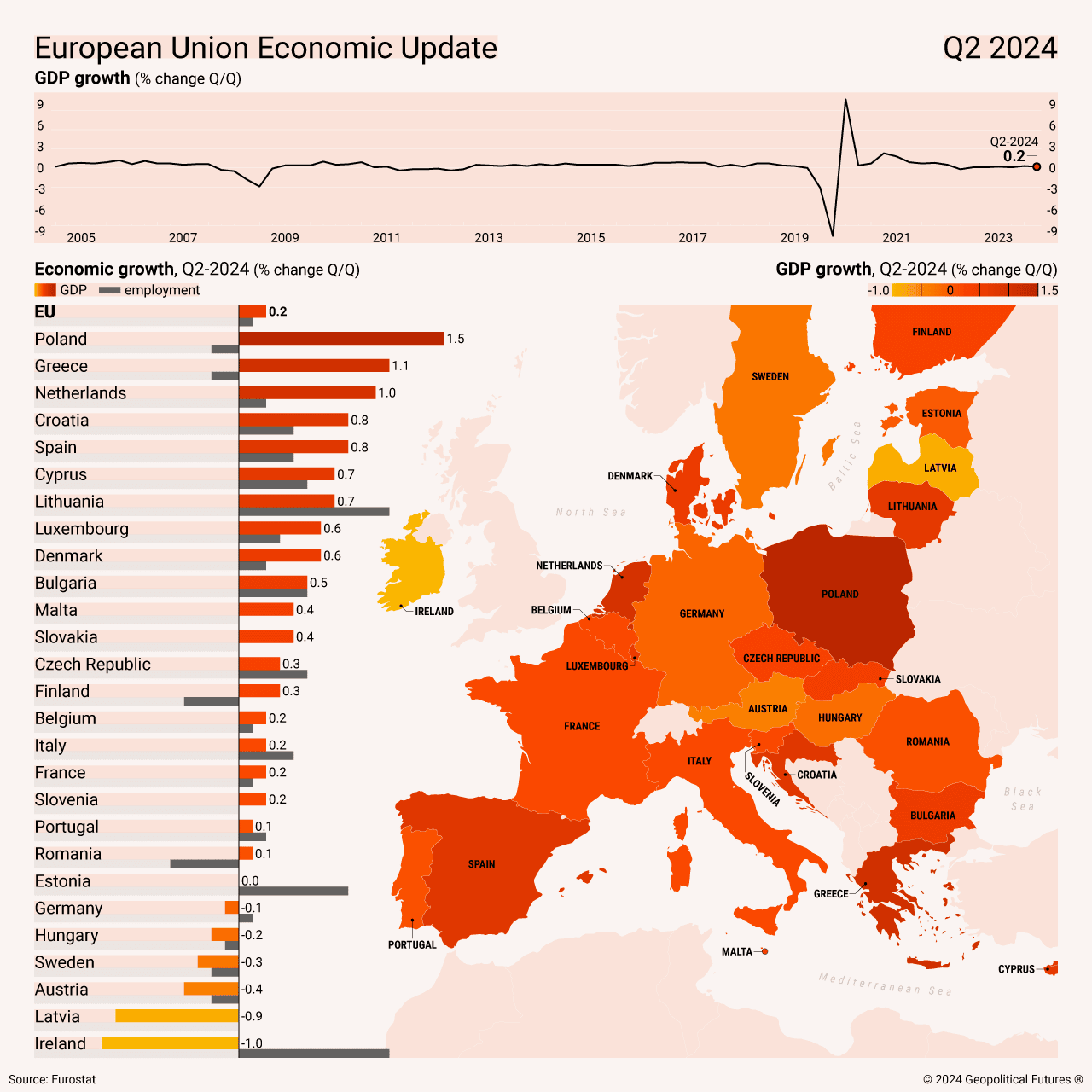
Economic Growth Slows Across Major European Economies
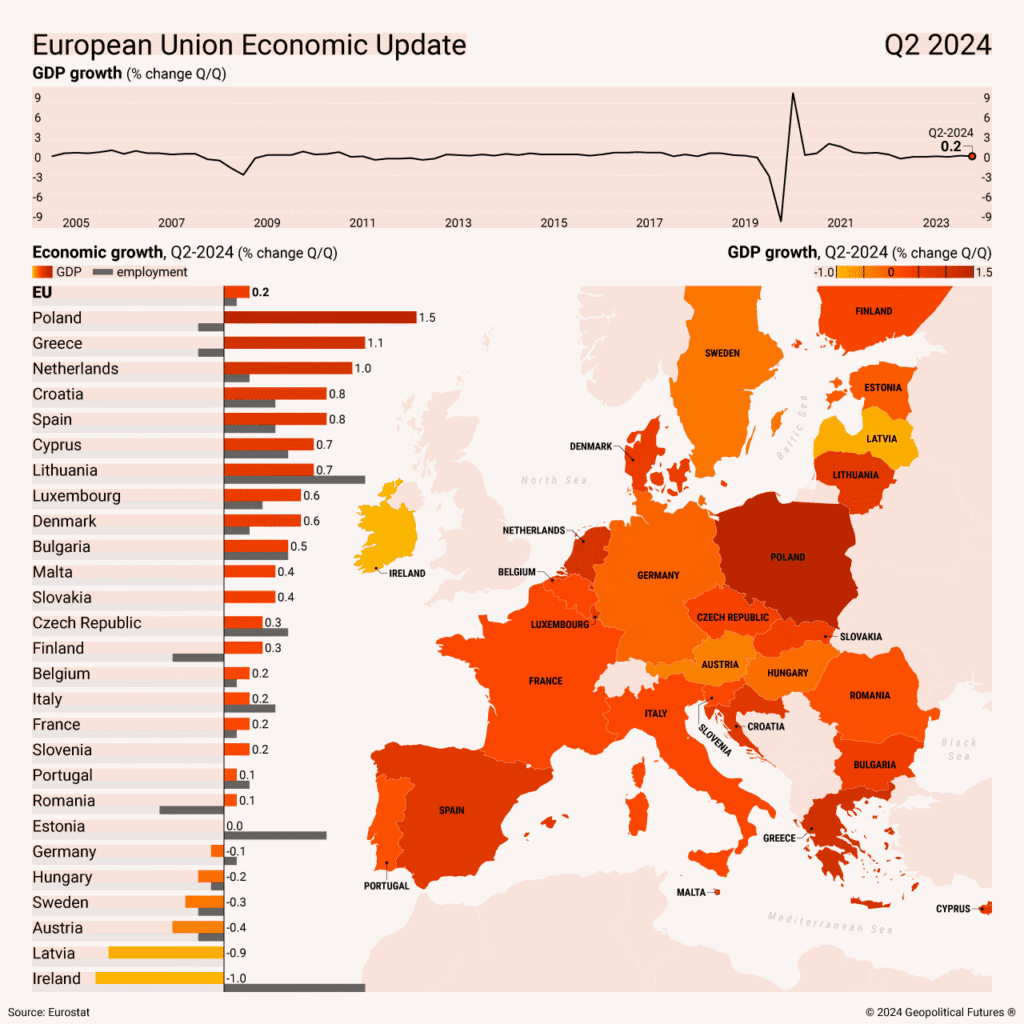
Economic growth across several major European economies has slowed in recent months, raising concerns about the region’s short-term outlook. New data released by national statistics offices and international financial institutions indicate weaker industrial output, lower consumer spending, and reduced business investment in key countries.
Germany, France, and Italy, often seen as the economic engines of Europe, have reported modest or near-stagnant growth. Analysts point to a combination of factors behind the slowdown, including high energy costs, tighter monetary policy, and ongoing global uncertainty. Higher interest rates, introduced to control inflation, have made borrowing more expensive for businesses and households, limiting investment and consumption.
The manufacturing sector has been particularly affected. Export-oriented industries are facing weaker demand from global markets, while supply chain disruptions continue to challenge production. At the same time, service sectors such as tourism and hospitality have shown more resilience, helping to partially offset losses in industrial activity.
Inflation, although showing signs of easing in some countries, remains a key concern. Rising prices have reduced household purchasing power, leading consumers to cut back on non-essential spending. This trend has had a direct impact on retail sales and small businesses, especially in urban areas.
European policymakers have acknowledged the challenges and emphasized the need for balanced economic strategies. The European Central Bank has signaled a cautious approach to future interest rate decisions, aiming to support growth without allowing inflation to rise again. Governments are also considering targeted measures to support vulnerable households and stimulate investment in strategic sectors such as green energy and digital infrastructure.
Despite the slowdown, economists stress that the situation does not necessarily point to a deep recession. Labor markets in many European countries remain relatively strong, with unemployment rates staying low. This has helped maintain a degree of economic stability, even as growth weakens.
Looking ahead, experts believe that Europe’s economic performance will depend on both domestic policy choices and global developments. Improved energy security, stable financial conditions, and renewed consumer confidence could help support recovery. However, continued uncertainty means that European economies may face a period of slower growth before stronger momentum returns.

